
Technology
PCB Surface Finish Guide: ENIG vs. HASL vs. OSP (and When to Choose Each)
ENIG vs. HASL vs. OSP: compare PCB surface finishes by cost, shelf life, fine-pitch suitability, and solderability — and learn how to choose the right one.
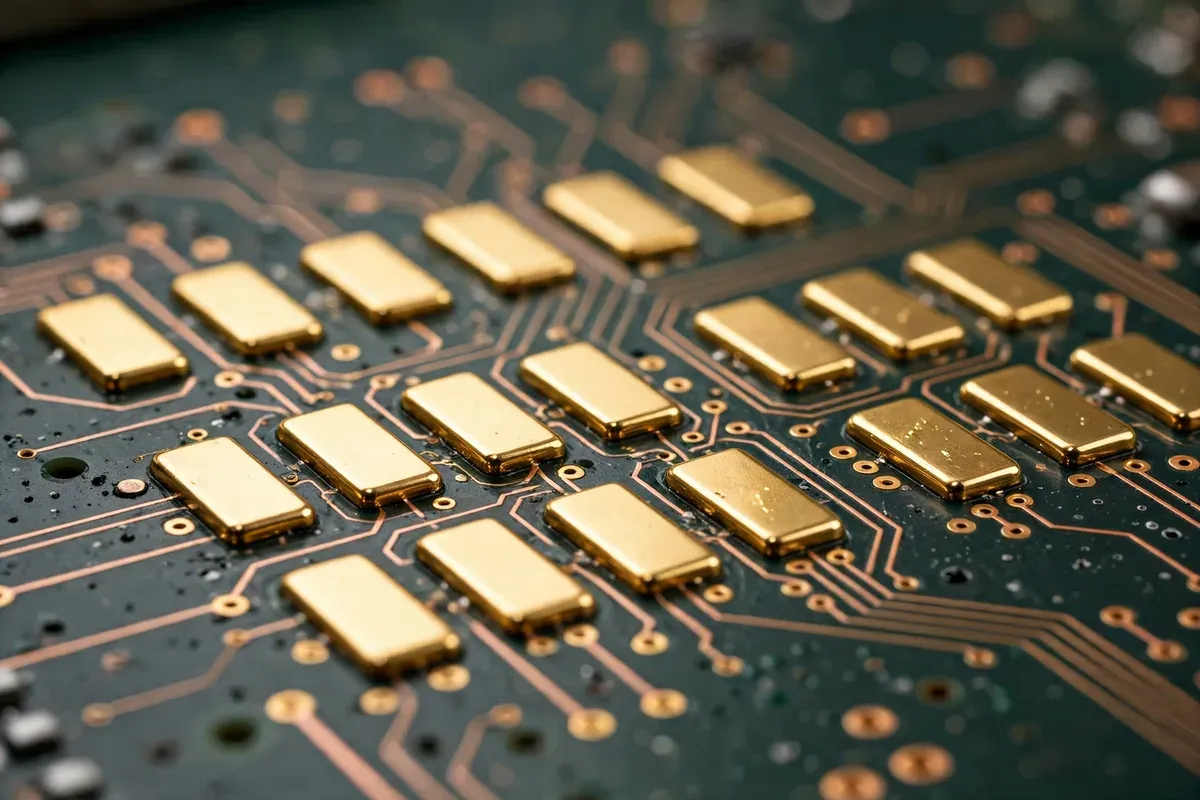
Every PCB leaves the factory with bare copper pads. Copper oxidizes. An oxidized pad does not solder well, and a pad that does not solder well becomes a defective board.
The surface finish is the thin protective layer applied to exposed copper. It keeps pads solderable during storage, survives assembly, and in some cases supports wire bonding or contact functions.
It is also one of the most overlooked decisions in a PCB order. The wrong finish causes weak joints or boards that cannot be assembled at all. This guide compares the five finishes you will actually encounter — ENIG, lead-free HASL, OSP, immersion silver, and immersion tin — and explains how to choose the right one for your design.
What Does a Surface Finish Do?
A surface finish has four jobs:
- Protect exposed copper from oxidation during storage and transport.
- Provide a solderable surface for SMT and through-hole assembly.
- Set pad flatness, which matters for fine-pitch components.
- Set shelf life and rework tolerance, and in some cases affect high-frequency performance.
No single finish is best for everything. Each one trades cost against performance in a different way.
The Five Common Surface Finishes
ENIG (Electroless Nickel Immersion Gold)
ENIG deposits nickel over the copper, then a thin layer of gold on top. The gold protects the nickel from oxidation. The nickel provides the soldering surface and a barrier against copper diffusion.
It produces a very flat surface, which makes it the standard choice for fine-pitch BGAs, QFPs, and other dense designs. It also supports aluminum wire bonding. Shelf life is long, typically around 12 months, and it is fully lead-free and RoHS compliant.
The trade-offs are cost and one well-known defect. ENIG is one of the more expensive finishes. If the nickel layer corrodes during gold deposition — the so-called "black pad" defect — solder joints can fail. This is a process-control issue at the factory, which is why ENIG quality depends on careful bath control.
Lead-Free HASL (Hot Air Solder Leveling)
HASL is the oldest finish still in wide use. The board is dipped in molten solder, and hot air knives blow off the excess, leaving a solder coating on the pads. Lead-free HASL uses a tin-copper alloy instead of tin-lead.
It is inexpensive, robust, and forgiving. Shelf life is long, around 12 months, and solderability is excellent because the pad is already coated in solder. It handles multiple reflow cycles and rework well.
Its weakness is flatness. The solder coating is uneven, which makes HASL a poor choice for fine-pitch components, typically below 0.5 mm pitch, where uneven pads cause bridging or open joints. Lead-free HASL also needs higher processing temperatures than tin-lead HASL, putting more thermal stress on the board.
OSP (Organic Solderability Preservative)
OSP coats the copper with a thin organic film that prevents oxidation. The film burns off during reflow, exposing clean copper that solders directly.
It is the lowest-cost finish, produces a perfectly flat surface, and works well for fine-pitch designs. It is lead-free and RoHS compliant.
The cost is a short shelf life, typically around 6 months, and sensitivity to handling. OSP boards should not sit in storage, should not be touched with bare hands, and do not tolerate multiple reflow cycles or rework well. OSP suits boards that move quickly from fabrication to assembly — not boards that may wait on a shelf.
Immersion Silver
Immersion silver deposits a thin layer of silver directly onto the copper through a chemical displacement reaction. It produces a flat surface suitable for fine-pitch components, solders well, and costs less than ENIG.
Its main weakness is tarnishing. Silver reacts with sulfur in the air, so these boards need protective packaging and controlled storage. Shelf life is typically 6 to 12 months.
Immersion Tin
Immersion tin deposits a thin layer of tin onto the copper. Like immersion silver, it gives a flat, fine-pitch-friendly surface at a moderate cost, and it solders well.
Its risks are tin whiskers — microscopic filaments that can grow from tin surfaces and cause short circuits — and a copper-tin intermetallic layer that grows over time and gradually reduces solderability. Shelf life is typically 6 to 12 months. It suits cost-sensitive designs, but rarely long-life or high-reliability products.
How the Finishes Compare
Finish | Shelf life | Cost | Fine pitch | Solderability | Lead-free / RoHS | Multiple reflow |
|---|---|---|---|---|---|---|
ENIG | ~12 months | High | Excellent | Excellent | Yes | Good |
Lead-free HASL | ~12 months | Low | Poor | Excellent | Yes | Good |
OSP | ~6 months | Lowest | Good | Good | Yes | Poor |
Immersion silver | 6–12 months | Medium | Good | Good | Yes | Fair |
Immersion tin | 6–12 months | Medium | Good | Good | Yes | Fair |
All five finishes above are lead-free and RoHS compliant. Traditional tin-lead HASL is not. It is still available in some markets, but it cannot be used for products sold into the EU and many other regions.
How to Choose by Application
- Fine-pitch BGA or QFP (0.5 mm pitch and below): ENIG. Flatness matters more than anything else here.
- Cost-sensitive boards with larger components: lead-free HASL. Cheap, durable, and easy to assemble.
- High-volume consumer products assembled immediately: OSP. Lowest cost, flat surface, and the short shelf life does not matter when boards go straight into production.
- Boards that may sit in storage before assembly: ENIG or lead-free HASL. Both hold up for around a year.
- Wire bonding: ENIG. It is the standard finish for aluminum wire bonding.
- High-frequency or RF designs: think carefully about ENIG. The nickel layer is magnetic and can add signal loss at high frequencies. Immersion silver is often a better fit for RF boards.
- Multiple assembly passes or heavy rework: ENIG or lead-free HASL. OSP and immersion finishes degrade with repeated heating.
Common Mistakes When Choosing a Surface Finish
- Defaulting to HASL for a fine-pitch design. The uneven surface causes bridging and opens that no amount of reflow profiling will fix.
- Choosing OSP and then storing the boards. Six months passes faster than most production schedules allow.
- Forgetting RoHS. Tin-lead HASL is still offered in some regions. If your product ships to the EU, it is not an option.
- Specifying ENIG for an RF board without considering the nickel layer. The finish can quietly degrade high-frequency performance.
- Handling OSP or immersion silver boards without care. Fingerprints and humidity damage these finishes before assembly even begins.
Most of these mistakes are made once, at the ordering stage, and discovered later, on the production line.
Get Your Board Design Reviewed Before Fabrication
The surface finish is one line on a PCB specification. It interacts with everything else on that specification: component pitch, assembly process, storage plans, and reliability requirements.
Our engineering team provides a free DFM review before PCB fabrication and PCBA assembly. The review covers manufacturability, surface finish selection, assembly feasibility, and potential reliability risks, with practical feedback you can act on.
If your design uses fine-pitch components, mixed assembly processes, or tight reliability requirements, send us your Gerber files and BOM. We will review the design and help identify risks before they become production losses.