
Technology
Turnkey PCBA Service Explained: What's Included and How to Choose a Provider
Turnkey PCBA means one partner handles PCB fabrication, parts sourcing, assembly, and testing. Learn what's included, what to provide, and how to choose.
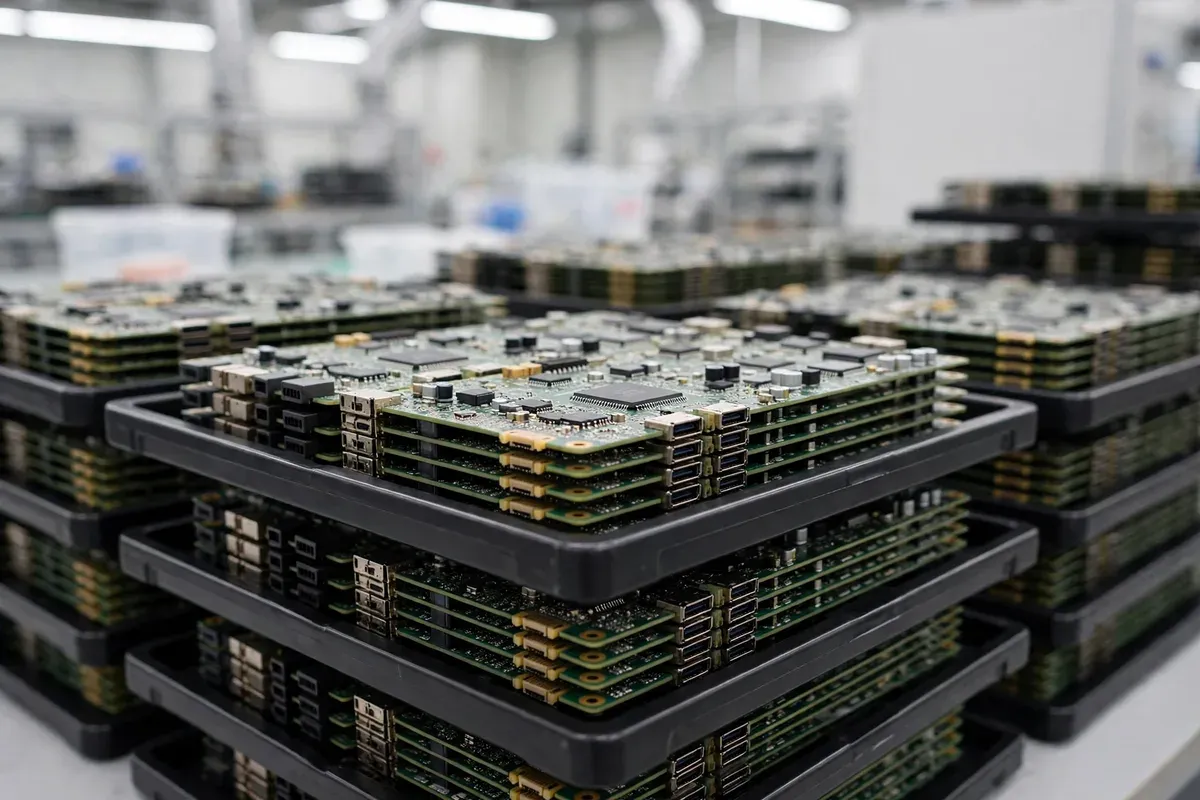
Bringing an electronic product to market means coordinating a long chain of suppliers. One factory makes the bare PCB. Another sources the components. A third assembles the board. A fourth tests it. Every handoff adds time, cost, and risk.
When a delay appears, each supplier points to the next one. When a defect appears, nobody owns it. The customer is left managing the gaps between vendors instead of focusing on the product.
Turnkey PCBA service exists to remove those gaps. One partner takes responsibility for the entire manufacturing chain, from bare board to tested, finished assembly. This guide explains what turnkey PCBA includes, what you need to provide, and how to choose a provider.
What Is Turnkey PCBA Service?
In a turnkey PCBA arrangement, a single manufacturer handles every stage of production. The customer supplies the design data. The manufacturer delivers finished, tested assemblies.
The name says it plainly: you turn the key, and the product is ready.
This is different from consigned assembly, where the customer buys components and sends them to the assembler. In a turnkey project, sourcing is part of the service, and the manufacturer owns procurement, scheduling, and quality across the whole chain.
What Does a Turnkey PCBA Service Include?
The exact scope varies by provider, but a full turnkey service normally covers six stages.
1. PCB Fabrication
The bare board is manufactured from your Gerber files, to the specified material, layer count, surface finish, and tolerances.
2. Component Sourcing
The provider purchases every part on the bill of materials (BOM), from common resistors to specialized ICs. This includes checking availability, managing long lead-time items, and buying through authorized distributors to avoid counterfeit parts.
Component sourcing is often where turnkey projects succeed or fail. A part that looks available on paper can carry a long lead time in reality. An experienced provider flags this early and proposes approved alternatives.
3. SMT and DIP Assembly
Surface-mount components are placed by SMT lines and soldered by reflow. Through-hole components are assembled by DIP lines, wave or selective soldering, with manual soldering for parts automation cannot handle.
4. Testing and Inspection
Inspection and testing run throughout the process, not only at the end. Typical stages include solder paste inspection (SPI), automated optical inspection (AOI) after reflow, X-ray inspection of hidden joints such as BGAs, in-circuit testing (ICT), and functional testing against your specifications.
A defect found at the assembler's bench costs far less than the same defect found after the product ships.
5. Box Build and Final Assembly
Turnkey service can extend to final assembly: mounting the PCBA into an enclosure, connecting cables and mechanical parts, and completing the finished unit.
6. Packaging and Logistics
Finished assemblies are packed, labeled, and shipped to your requirements, with documentation for traceability. One shipment replaces several partial deliveries from different vendors.
Why Choose Turnkey Instead of Managing Multiple Suppliers?
Single point of accountability
When one partner owns the whole chain, there is no argument about whose stage caused a problem. Quality issues, delays, and rework have one owner and one conversation.
Shorter lead time
Procurement, fabrication, and assembly planning happen in parallel instead of in sequence. There are no handoff gaps between vendors, no repeated inbound inspections, and no waiting for one supplier's output before the next can start.
Controlled cost
A turnkey quote covers the full manufacturing chain in one price. The customer avoids the hidden costs of managing multiple vendors: repeated shipping, duplicate inspections, coordination time, and buffer stock between stages.
Consistent quality
One quality system governs every stage, from incoming material inspection to final functional testing. Problems found at one stage feed back immediately, instead of surfacing weeks later at a different factory.
What You Need to Provide
A turnkey provider can only work with the data you supply. Four items are essential.
- Gerber files: the manufacturing data for the bare PCB, including drill files and the board outline.
- Bill of materials (BOM): the complete part list with manufacturer part numbers, quantities, and reference designators. Approved alternates for critical parts prevent delays when a component is unavailable.
- Assembly drawings and pick-and-place data: component placement, polarity, and any special assembly instructions.
- Test requirements: what should be tested, how, and what counts as a pass. Without a test specification, the provider can only inspect, not verify function.
An incomplete BOM is the most common cause of quotation delays.
How to Evaluate a Turnkey PCBA Provider
Not every assembler offering turnkey service delivers the same result. Five factors separate reliable providers from risky ones.
- Engineering support: a provider with a real engineering team reviews your design before production. A free DFM review catches manufacturability problems while changes are still inexpensive.
- Component sourcing discipline: parts should come from authorized distributors or the original manufacturer. Ask how the provider handles shortages, obsolescence, and counterfeit risk.
- Certifications matched to your industry: ISO9001 is the baseline for quality management. Automotive products generally require IATF16949. Medical devices require ISO13485. UL certification matters for products sold into the North American market.
- Testing capability: confirm that the provider can perform the testing your product needs, from AOI and X-ray to functional testing, and that test results are documented and traceable.
- Transparent communication: one point of contact, clear production status, and honest reporting when problems appear. A provider that hides delays is more expensive than a provider that reports them early.
Common Mistakes When Starting a Turnkey Project
- Sending an incomplete BOM and expecting an accurate quote
- Providing Gerber files without assembly drawings or placement data
- Skipping the test specification and discovering quality gaps after delivery
- Choosing a provider on unit price alone, without checking engineering support or sourcing discipline
- Skipping DFM review to save time, then paying for it in prototype revisions
All of them are expensive to fix after production begins.
Free DFM Review Before Manufacturing
Every PCB design contains assumptions.
Some are correct.
Some become expensive after production starts.
A professional DFM review exposes those risks while changes are still inexpensive.
Our engineering team provides a comprehensive DFM analysis before PCB fabrication and PCBA assembly. The review covers manufacturability, assembly feasibility, process compatibility, and potential reliability risks. You receive practical engineering feedback instead of generic design comments.
No obligation.
No hidden fees.
Finding one critical issue before production is far less expensive than correcting hundreds of assembled boards afterward.
If your PCB design is preparing for prototype or mass production, send us your Gerber files and BOM. Our engineers will perform a free DFM review and help identify manufacturing risks before they become production losses.